Parrot Behavioral Coaching
In the wild, birds have evolved into adaptive learners, continuously processing threats and novel experiences in order to survive. That capacity for learning does not disappear when a bird enters a home. Rather, the bird finds new things to learn. And unlike dogs and cats, companion birds have not been domesticated. They are wild animals living in human spaces, and they bring with them every instinct that entails: the drive to chew, to vocalize, to protect themselves and the humans that belong to them; to behave, in every sense, like birds.
What changes in captivity is not their nature, it is their surroundings. A parrot's behavior with people is shaped entirely by their individual history of interactions with them. This is where human responsibility becomes unavoidable. Every exchange with your bird, however small or routine, is either building trust or eroding it. There is no neutral ground. Learning to live well with a parrot means learning to be precise and intentional in your own behavior, and accepting that much of what your bird does is a reflection of what you have done.
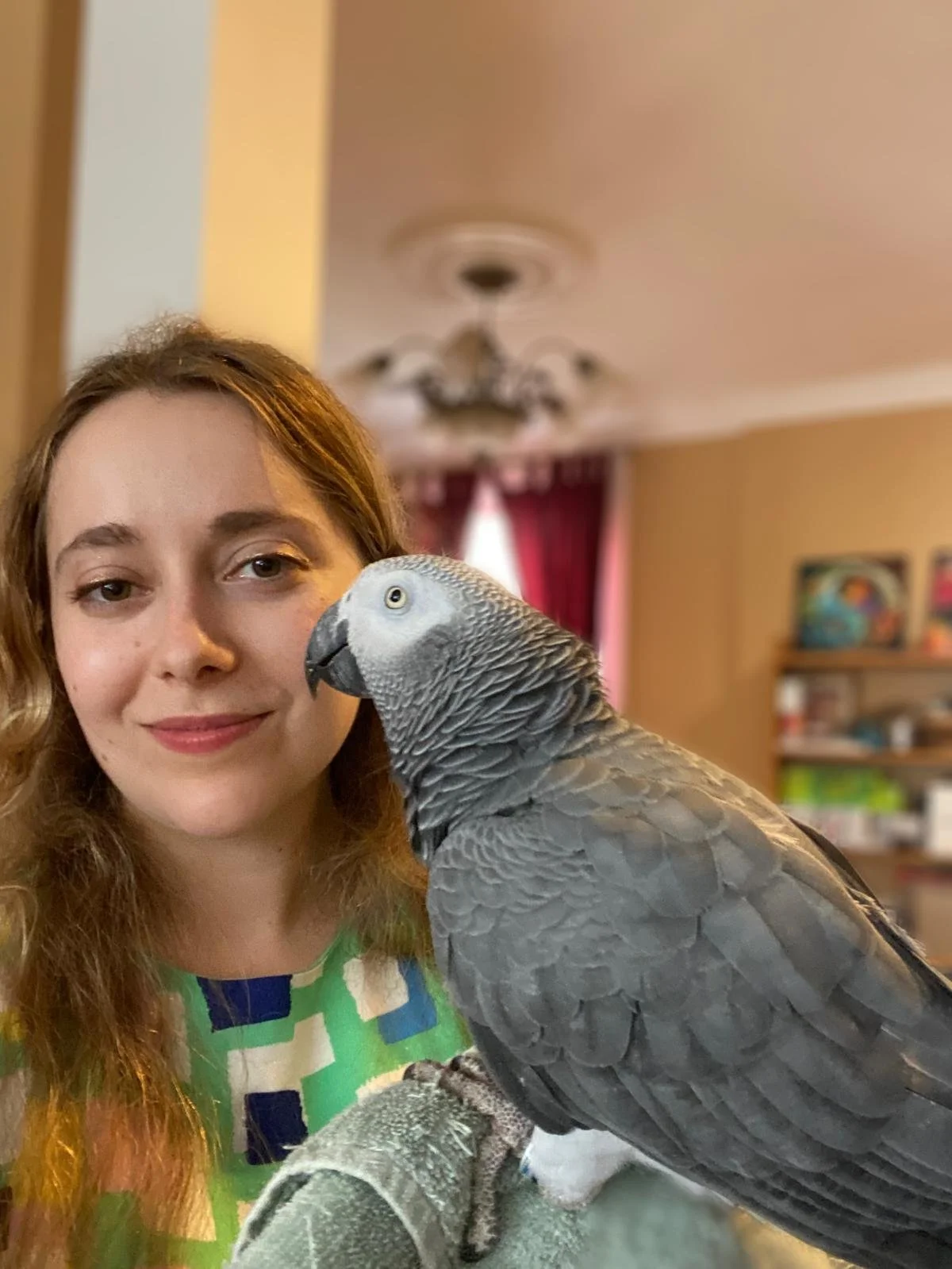
The goal is simple: you and your bird, living well together.
I start from a firm belief: it is never the parrot's fault.
Every behavioral problem has a human solution. When something is going wrong, the answer is not a different bird. It is a different approach.
What that looks like in practice:
I listen first. Your concerns, your household, your bird's history; these are all part of the picture. There is no one-size-fits-all fix.
I work at your bird's pace. Progress built on the parrot’s terms is progress that lasts.
I make this accessible. Behavioral work does not have to be complicated or stressful. Done right, it is straightforward and it works.
The foundation we build together gives you the tools to navigate any situation, not just the one that brought you here. That is the difference between a quick fix and a genuinely harmonious home.
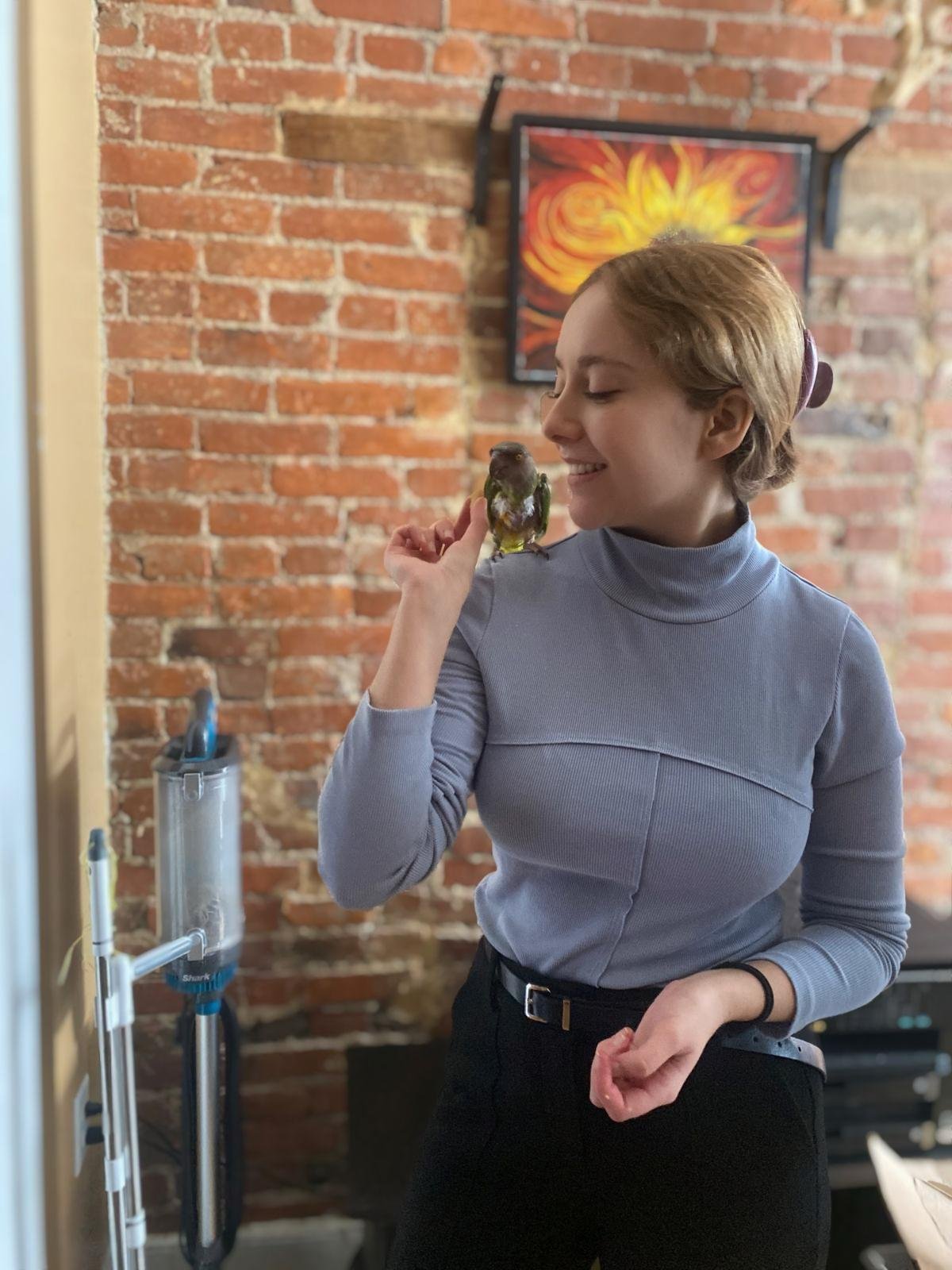
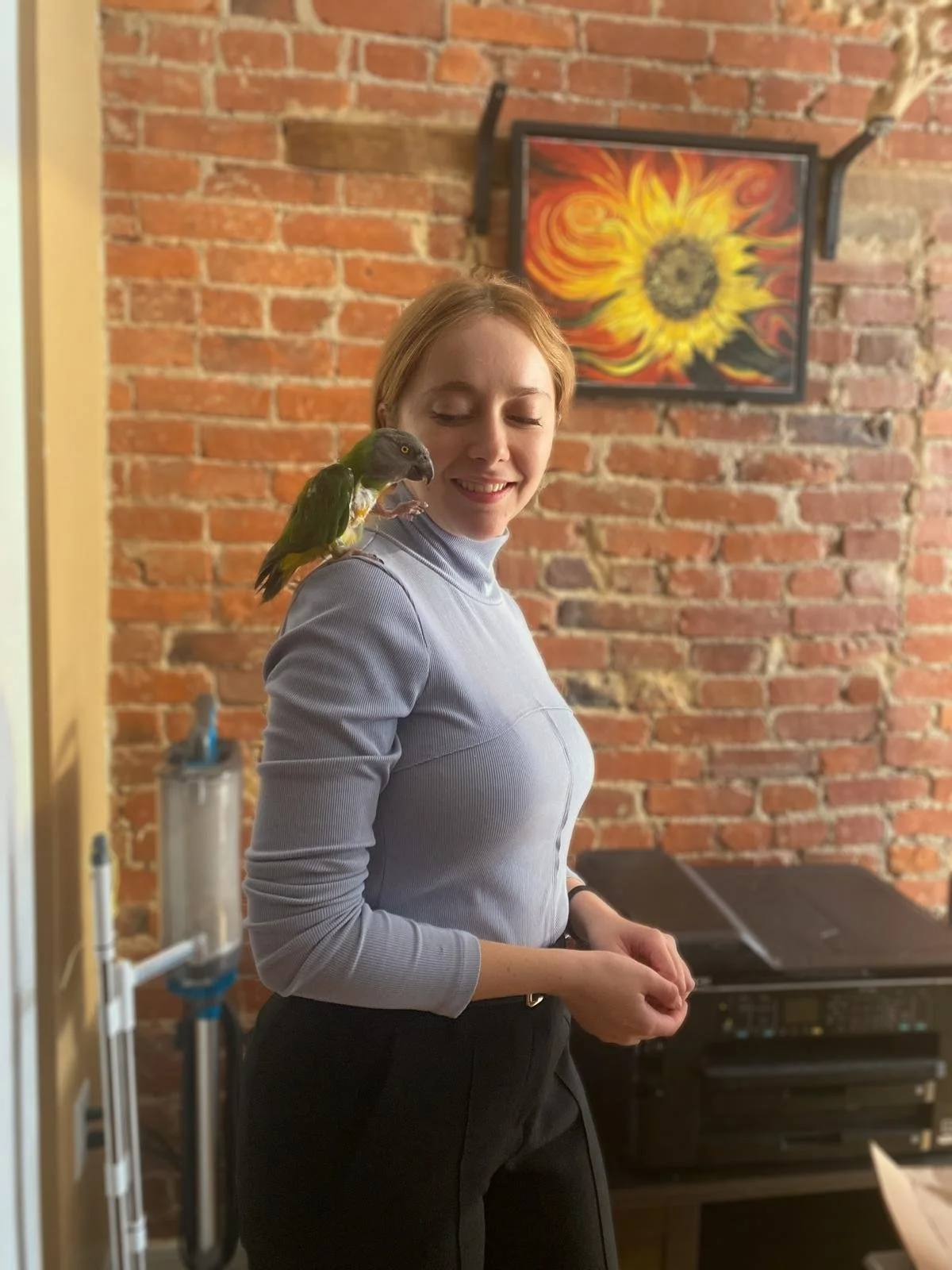
A success story
One client approached me with a history of receiving bites every time she tried to return her senegal parrot to his cage at the end of an out-of-cage session. Ducky had learned that biting made the hand disappear and bought him more time out. Ducky is smart: it was a logical solution from his perspective.
We did not focus on the bite itself. We focused on what was happening in the moments before it. First, I worked with the client on reading Ducky’s body language earlier in the sequence, before his excitement escalated to the point where biting was the only tool he had left.
Then we changed the association with cage returns entirely. Going back to the cage had always signaled the end of something good, which gave Ducky every reason to resist. We made the cage a neutral and eventually positive destination, using high-value treats delivered inside so he was moving toward something rather than being removed from something.
We also introduced a simple targeting behavior, so she had a reliable way to move him that did not require direct handling during a high-stress moment. This target training is a useful trust-building exercise in its own right.
The most important work was getting the bird owner to look at her own behavior in that sequence. She had been moving too quickly, telegraphing tension, and reaching in ways Ducky read as threatening. The bite was the last step in a long chain of miscommunication she had not known she was part of.
Ducky was not the problem. The cage return routine was the problem. And once the owner understood that, it was entirely fixable.
Coaching is $75 per session, with discounts available for multiple sessions booked together.